Why a Rock Club PA Flattens a Sarangi—and How U.S. Venues Are Fixing It

Photo: MIXING PRO, CC0, via Wikimedia Commons
In a 250-capacity room in Austin, a sarangi player asks the monitor engineer for 'a little less me.' The engineer pulls the fader. The instrument vanishes. The player asks for more. The engineer adds treble. Now it sounds like a violin with a head cold. Nobody is being difficult. The room’s PA was simply built for a different kind of music.
That scene repeats in clubs, churches, museums, and converted warehouses across the country. A presenter books a regional ensemble—a Hindustani duo, an Arab American oud and percussion project, a gamelan group from a university, a tabla and bansuri pair—and the show is beautiful in rehearsal and muddy in performance. The culprit is rarely the musicians. It is the assumption that every input on a standard rock console should behave like a close-miked electric guitar.
The Problem Isn’t Volume. It’s Assumption.
Most small and mid-sized U.S. venues run a PA optimized for loud, close-miked, midrange-heavy sources. The system expects a kick drum in the subs, a snare in the midrange, and a vocal that can be compressed into a brick. Regional instruments do not fit that template neatly.
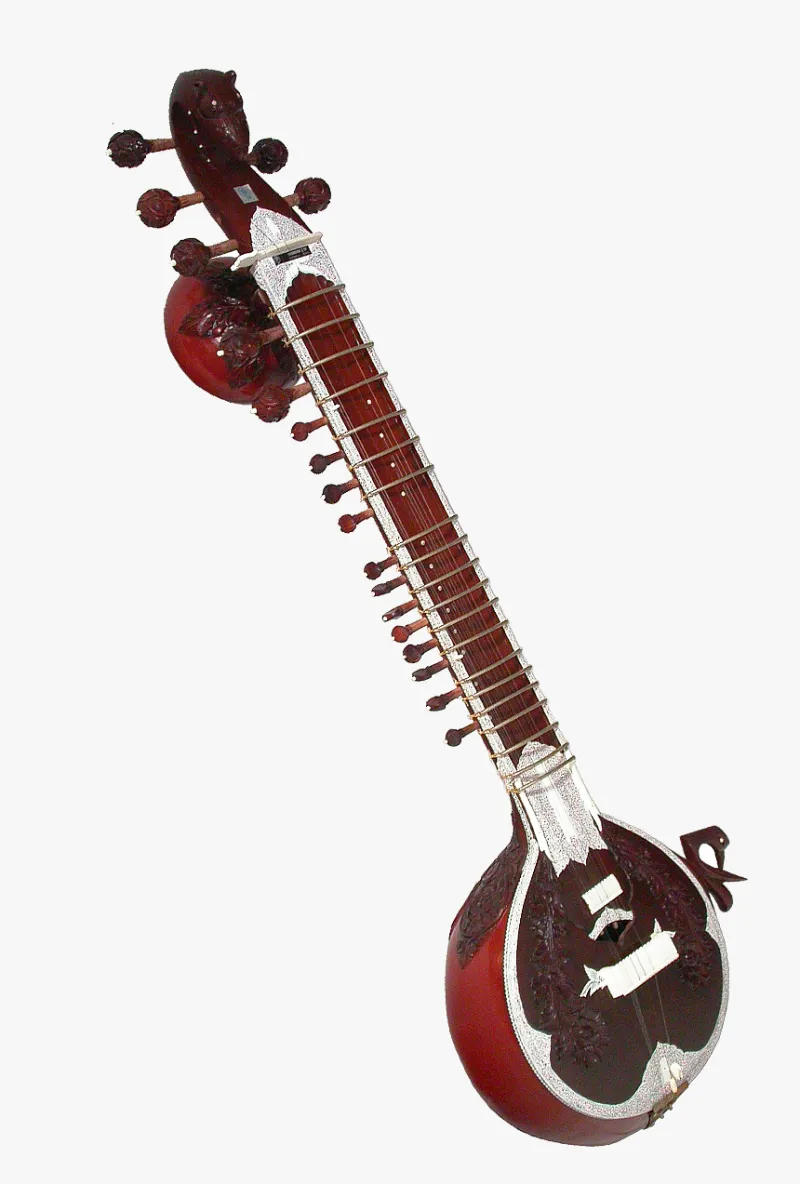
A sarangi is a bowed string instrument with sympathetic strings. It produces a complex, nasal, highly ornamented tone that lives in a narrow frequency band. Put it through a high-pass filter designed to clean up rumble, and you remove part of its body. Add heavy compression, and you flatten the bowing detail that makes the instrument speak. A pickup can help in loud rooms, but many sarangi players prefer a microphone because pickups miss the sympathetic ring.
An oud has quick transients and a warm, short sustain. Close-miking can work, but the mic must be placed to catch the sound hole and the player’s right hand without picking up every page turn and chair scrape. Too much compression makes the oud sound like a synthetic plucked patch. Too little attention to monitor placement invites feedback before the first maqam settles.
A gamelan is a different puzzle. Bronze metallophones, gongs, and drums produce long decay, wide stereo spread, and interlocking parts that need space. If you mic every instrument and push them into a mono PA, the ensemble turns into a wash. If you rely only on two overheads, the soft parts disappear. The room itself is part of the tuning.
Tabla is perhaps the most misunderstood. The instrument’s bayan has a low fundamental that can excite a subwoofer in unhelpful ways, while the dayan produces sharp, speech-like strokes. Heavy limiting smears the attack. Gating makes ghost notes vanish. A rock engineer may instinctively reach for both.
Three Rooms, Three Fixes
Marisol Vega, a front-of-house engineer in Austin, started carrying a small 'acoustic package' to club dates: two cardioid condenser mics, two dynamic mics, four stands, and a short list of console presets. 'The first thing I do is bypass the high-pass on anything bowed or plucked,' she says. 'Then I stop thinking about the master bus as a rock mix. I want the room to hear the instrument’s own dynamics.'
In Chicago, presenter Priya Raman built a tech rider template for regional ensembles after a 2026 spring series in a 400-seat theater. The rider asks for a channel list with instrument names, a stage plot with distances, and 90 minutes of soundcheck for a five-piece group. 'We stopped saying “world music” on the rider,' Raman says. 'We write “sarangi—microphone preferred, no high-pass, light compression only.” Engineers respond to specifics.'
Devin Cho, who mixes at a Brooklyn venue that hosts everything from hardcore to Hindustani recitals, took a simpler route: the venue bought six flexible microphones and two DI boxes, and wrote an 'unamplified ensemble' preset into its digital console. The preset turns off the subs, opens the high-pass filters, and reduces master compression. 'It’s not perfect,' Cho says. 'But it gets us 70 percent of the way there before the guest engineer touches anything.'
Touring musicians are adapting too. Nadia Haddad, an oud player based in Detroit, travels with her own small preamp and a preferred microphone. 'I used to show up and hope,' she says. 'Now I send a one-page PDF with photos of my instrument and where the mic should go. It feels basic, but it has changed how shows sound.'
The Tech Rider Is a Translation Device
A good tech rider for a regional ensemble is not a demand list. It is a translation device. It tells a house engineer what the instrument is, how it produces sound, and what the PA should not do to it.
Keep it short. Include a stage plot with instrument names and approximate positions. List each channel and whether it needs a microphone, pickup, or DI. Note any monitor preferences. Add a line about dynamics processing: 'Please avoid gating tabla' or 'Light compression only on sarangi.' If the ensemble carries its own engineer, say so and put that person on the guest list early.
Presenters can help by asking for this information at contract stage, not the week of the show. A 15-minute conversation about stage plot and soundcheck can save a whole performance.
A Plain-English Checklist
For organizers and hosts:
- Ask for a tech rider with instrument names, microphone preferences, and a stage plot.
- Book 30 to 90 extra minutes for soundcheck, depending on ensemble size.
- Confirm whether the PA has subwoofers and whether they can be turned down or off.
- Ask the engineer to bypass high-pass filters on acoustic instruments unless there is a specific reason.
- Provide flexible microphones, stands, and DI boxes—not just the usual rock drum package.
- Keep master compression light. Let the ensemble’s dynamics survive.
- Put the ensemble’s own engineer or tour manager on the guest list and in the soundcheck conversation.
- Write the venue’s monitor setup into the advance, not just the input list.
For audiences:
- Arrive on time. Regional ensembles often use the first minutes of a set to settle into the room.
- Sit closer to the center if you can. Off-axis seats lose the high partials that give many regional instruments their character.
- If something sounds wrong, tell the front-of-house engineer politely at intermission. They may not know the instrument’s vocabulary.
- Skip the loud bar conversation during a quiet alap or oud taqsim. The room is part of the mix.
Why It Matters
Regional music is not supposed to sound like a rock band with different instruments. A sarangi’s cry, an oud’s quick decay, a gamelan’s shimmer, a tabla’s speech—these are not decoration. They are the music. When a PA flattens them, the audience does not just hear a bad mix. They hear a false version of the tradition.
The good news is that the fix is often modest: a few microphones, a different preset, a clearer rider, and an engineer willing to listen before reaching for the compressor. In 2026, more U.S. venues are learning that the room is part of the band. The ones that get it right are not spending more money. They are paying better attention.