Mudras in the Gymnasium: How U.S. Teaching Artists Build Regional Indian Dance Curricula for Kids
7:45 A.M., Third Grade, Gymnasium
The floor is still tape-marked for dodgeball. A teaching artist asks 28 third graders to stand in aramandi—knees bent, feet turned, spine tall. Half the class wobbles. One kid asks if this is karate. Another already has the hand shape right. By 8:30, they will have learned a mudra for a bee, counted a simple tala cycle, and retold a two-minute episode from an epic without anyone putting on a costume.
This is what a South Asian dance residency looks like in a U.S. school in 2026. It is not a performance assembly with a Q&A tacked on. It is a sequenced curriculum, usually built by a teaching artist who has spent years inside a specific form and a few more learning how to translate that form for a room of children who have never seen it.
Teaching artists across the country say the booking pace has jumped. Arts councils, PTA committees, and district arts coordinators are scheduling more residencies than they did a few years ago, often with federal, state, and local arts funding in the mix. The boom is welcome. It is also a stress test. More residencies mean more schools asking for something Indian, and that phrase is exactly where the flattening starts.
Start With the Form’s Grammar
Good teaching artists do not begin with a theme like celebrate diversity. They begin with the form’s grammar. For Bharatanatyam, that might mean one adavu repeated with precision, one set of mudras, and one tala cycle clapped in a call-and-response. For Kathakali, it might mean the navarasa, a handful of hand gestures, and a story episode staged with minimal props; the makeup and costume stay in video clips because there is no responsible way to do a full Kathakali transformation in a 45-minute class. For a regional folk form, it might mean the circle, the footwork, and the community context that makes the dance participatory rather than presentational.
You cannot teach everything, so you teach one doorway. A five-day residency might focus on mudra vocabulary and a short narrative sequence. A ten-week residency can go deeper into rhythm, stance, and repertoire. The best plans look like a staircase: each session adds one new skill, one new word, one new piece of context, and one chance to practice what came before. The form stays the center of gravity. The classroom theme—weather, folktales, community—is a bridge, not a replacement.
Context Without the Postcard
Cultural context is where residencies can go wrong in two directions. One is the postcard version: ancient India, incense, elephants, and a blur of festivals. The other is the apology version: so much hedging that students learn nothing specific. Teaching artists tend to aim for the middle: name the region, name the language, name the community, and be honest about what a 45-minute class can and cannot show.
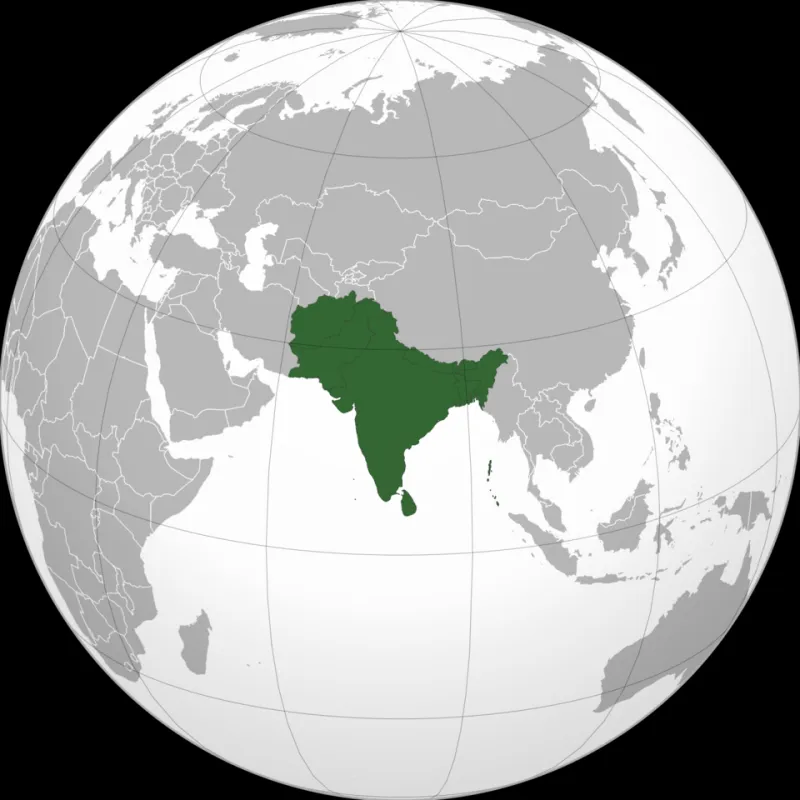
A map helps. A short audio clip of a singer or drummer helps. An artist bio that says where the teacher trained and who their teachers were helps more than a paragraph about timeless tradition. Students can understand that Bharatanatyam has a concert repertoire, that Kathakali is tied to temple and village performance histories in Kerala, and that folk forms are not failed classical forms. They can also understand that India is not one dance culture. The word regional is not a technicality. It is the whole point.
Teaching artists also have to be careful with sacred material. A mudra or a story episode can be taught respectfully, but it should not become a costume game or a joke. Many artists build in a simple content note for classroom teachers: here is what we will touch, here is what we will not, here is how to frame it if a student asks a big question. That is not censorship. It is planning.
The 2026 Residency Boom
The surge in bookings has exposed old fault lines. Schools often want a single artist to cover multiple grades, multiple schools, and multiple cultural traditions in one contract. Teaching artists are pushing back with clearer scopes: one form, one age band, one sequence. They are asking for prep time, planning meetings with classroom teachers, and fair pay for travel and materials. Residencies are not substitute teaching. They are specialized instruction, and the planning load is real.
Space is another issue. Gymnasiums, cafeterias, and music rooms all have different floors and acoustics. A Bharatanatyam warm-up needs room for bent-knee stance and traveling adavus. A folk circle needs enough space to move without knocking into desks. A Kathakali storytelling session may need only a clear corner and a screen, but it still needs a room where students can hear the rhythm. Teaching artists learn to adapt, but schools can help by asking what the form actually requires before the first day.
Then there is the question of quality control. A boom can invite drive-by programming: a one-hour world dance assembly that checks a box and leaves no trace. The better model is a residency with a visible arc—preparation, instruction, reflection, and a sharing that is honest about what students learned. Video can supplement the work, but it cannot replace a trained artist in the room. Local teacher training can extend the work, but it should not turn into a shortcut that bypasses the form.
What the Kids Keep
At the end of a residency, the assessment is not whether every student can perform a full margam. It is whether they can show one mudra accurately, count one cycle, explain one regional difference, and ask a better question than they did on Monday. The form stays in the room. The kids keep a doorway.
That is the difference between a multicultural sampler and a curriculum. A sampler says here is a taste of everything. A curriculum says here is one thing, taught carefully, with its name attached. In 2026, U.S. schools are booking more of these residencies than ever. The ones that last will be the ones that let the dance lead.